Let’s be real for a second. If you are looking at a laptop that costs upwards of ₹2,00,000 in India, you aren't just looking for a machine to browse Chrome or play Valorant on low settings. You are looking for an investment. You want a machine that can chew through 4K video timelines during the day and run Cyberpunk 2077 with Path Tracing maxed out at night, without sounding like a jet engine taking off from Mumbai airport.
Enter the Lenovo Legion 7i.
For years, the Legion series has held a special place in my heart. While brands like ASUS ROG go loud with aggressive gamer aesthetics and Alienware leans into sci-fi designs, Lenovo’s Legion 7i has always been the "grown-up" gaming laptop. It’s the sleeper build. It looks professional enough to take into a boardroom meeting at a start-up in Bangalore, but under the hood, it’s packing hardware that would put many desktops to shame.
But here is the burning question: with prices skyrocketing this year, is the premium you pay for the "7i" badge over the excellent "5i Pro" actually worth it? I spent a month using this machine as my daily driver for work and play to find out the real truth.
Quick Specs: What Are You Paying For?
Before we dive deep, here is exactly what is powering the beast I tested. Note that specs can vary slightly based on the specific SKU sold by Indian retailers like Croma, Reliance Digital, or Lenovo’s own site.
| Feature | Specification (Review Unit) |
| Processor | Intel Core i9-14900HX (24 Cores, 32 Threads) |
| Graphics (GPU) | NVIDIA GeForce RTX 4080 (12GB GDDR6) - 175W TGP |
| RAM | 32GB DDR5-5600MHz (Dual Channel, Upgradable) |
| Storage | 1TB NVMe PCIe Gen4 SSD (Extra Slot Available) |
| Display | 16-inch IPS, WQXGA (2560 x 1600), 16:10, 240Hz, 500 Nits |
| Battery | 99.9Whr (Max legal limit for flights) |
| Charger | 330W Slim Gallium Nitride (GaN) Adapter |
| Weight | Approx 2.6 kg (Laptop only) |
| OS | Windows 11 Home |
Design & Build: Built Like a Tank (A Heavy One)
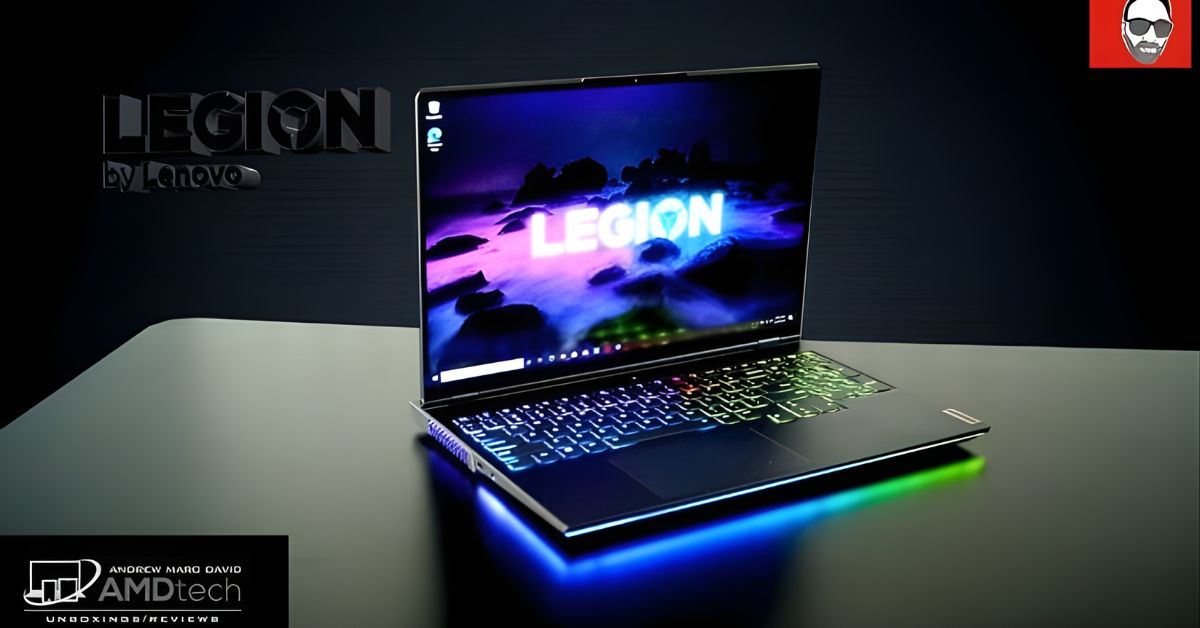
When you lift the Legion 7i out of the box, the first thing you notice is the cold touch of metal. Unlike budget gaming laptops loaded with plastic, the 7i uses an anodized aluminum chassis, both on the lid and the keyboard deck. It feels incredibly premium and rigid. There is virtually zero flex on the keyboard deck even when you mash keys in frustration during an Elden Ring boss fight.
Lenovo has refined its design language. It’s cleaner now. The massive "LEGION" text that used to be on the lid is gone, replaced by a subtle logo in the corner. It looks sophisticated.
The "Rear Trunk" Advantage
One feature I absolutely love about the Legion design DNA is the rear I/O dashboard. The power plug, HDMI 2.1 port, ethernet, and main USB ports are tucked away at the back. This means your mouse hand (left or right) isn't fighting with tangled cables on the side of your desk. It makes for a very clean setup.
The Weight Reality Check
Don't let the marketing fool you into thinking this is a "thin and light." It is not. At around 2.6 kg, plus a nearly 1kg power brick, you are carrying over 3.5 kg in your backpack. You will feel this on your commute in the Delhi Metro or a Mumbai local. It's a portable desktop, not a coffee shop ultrabook.
Display & Visuals: A Creator's Dream
Lenovo has stuck with the tried-and-tested 16-inch, 16:10 aspect ratio screen, and frankly, it's the right choice. The extra vertical screen real estate is a godsend for productivity apps like Premiere Pro or Excel.
The real truth about this panel:
Gaming Smoothness: The 240Hz refresh rate is buttery smooth. If you play competitive shooters like CS2 or Valorant, this screen keeps up effortlessly. You will never blame the display for missing a shot.
Color & Brightness: It hits 500 nits of brightness, which is good enough for brightly lit rooms. The key here is the 100% DCI-P3 color coverage. Colors pop without looking oversaturated. If you are a content creator editing photos or videos, you can trust this display right out of the box.
The Missing Mini-LED: Here is a slight negative. At this price point in 2024-2025, some competitors (like ASUS ROG) are offering Mini-LED panels, which offer deeper blacks and better HDR performance. The Legion's IPS panel is fantastic, but the blacks are grey-ish in a dark room compared to Mini-LED or OLED.
Performance: Unleashing the Beast
This is why you pay the big bucks. The combination of the Core i9-14900HX and a full-fat, 175W TGP RTX 4080 is monstrous.
Lenovo uses what they call "Legion Coldfront" cooling technology. In simple terms, it uses massive vapour chambers and liquid metal thermal compound on the CPU. Does it work? Yes, but with a caveat.
The Real-World Stress Test
I threw everything at this machine:
Cyberpunk 2077 (2K Ultra, Path Tracing DLSS Quality): Averaged around 75-85 FPS. It looks absolutely stunning and runs flawlessly.
Alan Wake 2 (Max Settings): This game brings GPUs to their knees. The Legion 7i handled it at a playable 60+ FPS with DLSS and Frame Generation enabled.
Productivity: Exporting a 10-minute 4K footage in Premiere Pro took mere minutes. Scrubbing through the timeline was lag-free.
Thermals and Noise (The "Jet Engine" Factor)
Here’s the kicker. In "Performance Mode," this laptop gets loud. You will need headphones while gaming; otherwise, the fan noise will drown out the game audio. However, the cooling works. The keyboard deck, specifically the WASD area, remains relatively cool even during marathon sessions.
Keyboard & Trackpad: The Industry Benchmark
Lenovo knows how to make keyboards. The Legion 7i’s TrueStrike keyboard is easily one of the best you will find on a gaming laptop.
It has deep travel (1.5mm), a satisfying tactile bump, and it’s relatively quiet. Typing long articles was a pleasure. Crucially for many Indian users, it retains a full-sized number pad, which is essential for data entry or setting macros.
It features per-key RGB lighting powered by Legion Spectrum software. It's bright and customizable. The trackpad is glass, massive, and supports Windows Precision drivers perfectly.
Battery & Endurance: The Achilles Heel
Let's manage expectations right now. This is a high-performance gaming laptop. The battery life is going to be mediocre, regardless of the massive 99.9Whr battery inside.
Gaming on Battery: Don't do it. Performance tanks and it dies in <1 hour.
Office Work: With brightness at 50%, RGB off, and "Hybrid Mode" on, I managed 4 to 5 hours.
The good news? The included 330W GaN charger is heavy but charges the beast incredibly fast. You can get from 0% to 70% in just about 30 minutes.
The Competition: Battle of the Titans
In the ₹2 Lakh to ₹2.8 Lakh segment in India, the Legion 7i has two main arch-rivals.
1. ASUS ROG Strix Scar 16:
Better at: Screen (Mini-LED options).
Worse at: Build quality (uses more plastic) and professional looks.
2. Alienware m16 R2:
Better at: Brand prestige and unique sci-fi design.
Worse at: Often more expensive for the same specs ("Alienware Tax").
The Winner?
If you want the absolute best screen for HDR gaming, go for the ASUS. But if you want the most balanced "do-it-all" machine that feels premium and durable, the Lenovo Legion 7i is the winner.
Final Verdict: Should You Buy It?
The Lenovo Legion 7i is a phenomenal piece of engineering. It’s a desktop replacement that you can technically carry around. It’s expensive, heavy, and loud when pushed, but it delivers exactly what it promises: uncompromised power.
Don't waste your money if:
You are a casual gamer (stick to the Legion Slim 5 or LOQ).
Portability is your main priority.
You need all-day battery life.
Buy it immediately if:
You have the budget and want top-tier performance without building a PC.
You are a creative professional who needs power by day and gaming by night.
You appreciate premium metal build quality over flashy "gamer" plastics.
Rating: 4.5/5 Stars