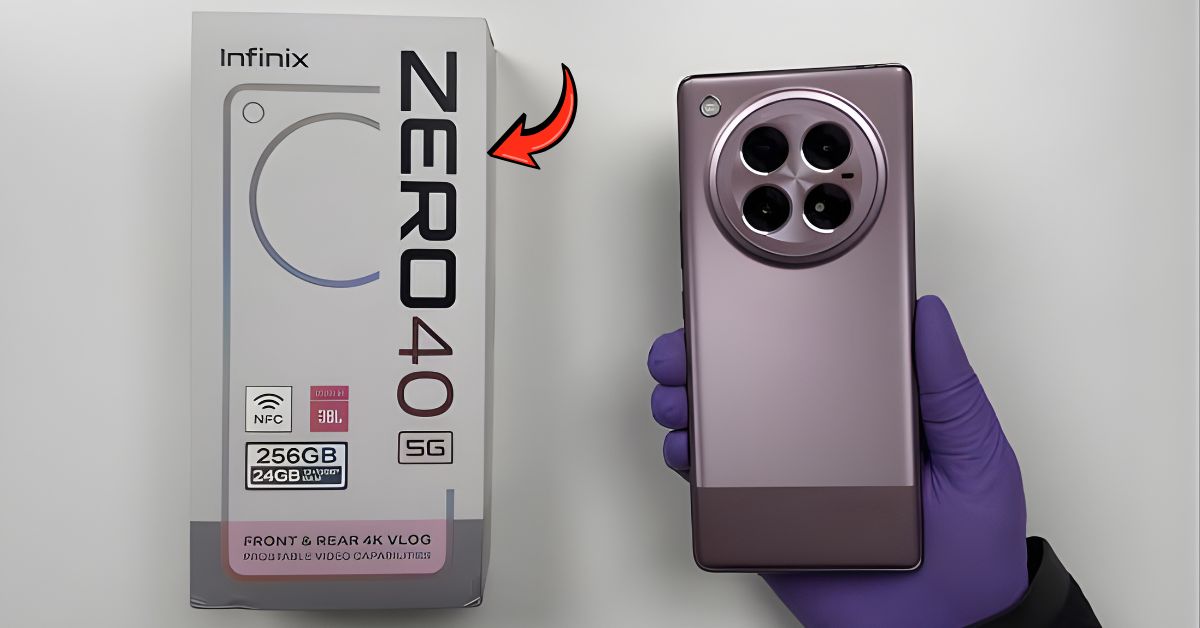
In the Indian smartphone market, the "under ₹30,000" segment is a bloodbath. You have Motorola offering IP68 ratings, Realme pushing periscope cameras, and iQOO chasing raw speed. So, when Infinix drops the Zero 40 5G with a massive claim—"The only phone in its class with 4K 60FPS video on ALL cameras"—it grabs your attention.
But let's be honest. Infinix has often been seen as a "budget" brand. With the Zero 40 5G, they are trying to wear a tuxedo. It looks premium, feels expensive, and even talks to your GoPro. But is it actually good, or is it just a spec-sheet paper tiger?
I spent weeks with this device, vlogging, gaming, and charging it wirelessly (yes, it has that too) to give you the unfiltered truth.
Quick Specs: What Are You Paying For?
Here is the raw data powering this device (Indian Unit).
| Feature | Specification |
| Processor | MediaTek Dimensity 8200 Ultimate (4nm) |
| RAM | 12GB LPDDR5X (Upgradable via Virtual RAM) |
| Storage | 256GB / 512GB UFS 3.1 |
| Display | 6.78" 3D Curved AMOLED, 144Hz, 10-bit, 1300 Nits Peak |
| Rear Cameras | 108MP (OIS) + 50MP (Ultrawide) + 2MP (Depth) |
| Front Camera | 50MP (AF) with 4K 60FPS Recording |
| Battery | 5000 mAh |
| Charging | 45W Wired + 20W Wireless Charging |
| Special Feature | Native GoPro Integration Mode |
Infinix has nailed the aesthetics. The phone features a "3D Curved" design on both the front and back, making it feel impossibly thin (7.9mm) and comfortable to hold.
The Look: The large circular camera module is trendy, reminiscent of premium Vivo or OnePlus flagships. The "Violet Garden" colorway has a unique texture that resists fingerprints well.
The Build: It feels premium, but don't be fooled—the frame is plastic, not metal. It has an IP54 rating (dust and splash resistant), which is decent, but competitors like the Moto Edge 50 Fusion offer superior IP68 water resistance.
Read More: Samsung Galaxy S26 Ultra
Display & Visuals: Speed Demon
The screen is one of the strongest selling points here. You are getting a 144Hz Refresh Rate at a price where most brands are stuck at 120Hz.
Smoothness: Scrolling through UI and compatible games feels fluid. The curve adds an "infinity" effect to videos, though accidental touches can happen if you aren't using a case.
Brightness Reality Check: On paper, it claims 1300 nits. In direct Indian sunlight (noon in Delhi), it is visible but not blindingly bright. It’s good enough, but don't expect Samsung S24 levels of outdoor clarity.
Protection: It is covered by Corning Gorilla Glass 5. Good, but not the latest Victus.
Performance: The Dimensity Sweet Spot
The Dimensity 8200 Ultimate is a very capable chipset. It sits comfortably above the Snapdragon 7 Gen 3 found in many rivals.
Gaming Test:
BGMI / COD Mobile: Runs smooth at 60fps. You can push it to 90fps in supported titles.
Genshin Impact: Playable at Medium settings, but the phone will get warm near the camera module after 20 minutes.
Daily Use: With 12GB of RAM standard, apps stay open in the background forever. It flies through social media apps and multitasking.
Camera & GoPro Mode: The Vlogger's USP
This is the section that matters most for this phone. Infinix is marketing this heavily to creators.
The "Vlog" Promise: It shoots 4K at 60FPS on the Main Rear, Ultrawide Rear, AND the Front Camera. This is extremely rare under ₹30k. Most phones cap the ultrawide or selfie cam at 1080p or 4K/30. If you are a YouTuber, this flexibility is gold.
Video Quality: The OIS (Optical Image Stabilization) is decent, but at 4K 60fps, the electronic stabilization (EIS) struggles a bit. Walking and talking is fine, but running will result in jittery footage.
GoPro Mode:
How it works: You can connect a compatible GoPro wirelessly and use the phone as a viewfinder and controller directly from the camera app.
Is it useful? It’s a gimmick for 90% of people. But for the 10% who own a GoPro, it's actually convenient to not need the separate GoPro Quik app for basic framing.
Battery & Wireless Charging: A Surprise Entry
Endurance: The 5000mAh battery easily lasts a full day of mixed use (Instagram, calls, YouTube).
Charging: The 45W wired charging is... okay. It takes about an hour to go 0-100%. Rivals like Realme and OnePlus offer 67W or 100W charging in this segment.
The Wireless Ace: However, it supports 20W Wireless Charging. This is almost unheard of in this price segment (usually reserved for the Moto Edge 50 Pro which is costlier). If you have a wireless charging pad at your desk or in your car, this is a massive convenience feature.
The Competition: The Rivals
Let's look at the fierce competition in the sub-30k Indian market.
Title: Infinix Zero 40 5G vs Motorola Edge 50 Fusion vs Realme 13 Pro
| Feature | Infinix Zero 40 5G | Moto Edge 50 Fusion | Realme 13 Pro |
| Display | 144Hz Curved | 144Hz Curved | 120Hz Curved |
| Processor | Dimensity 8200 Ult (Best) | Snapdragon 7s Gen 2 | Snapdragon 7s Gen 2 |
| Rear Camera | 108MP (No Telephoto) | 50MP (Sony Lytia) | 50MP (Sony Lytia) |
| Video | 4K 60FPS (Front/Back) | 4K 30FPS | 4K 30FPS |
| Protection | IP54 (Splash) | IP68 (Underwater) | IP65 |
| Wireless Charge | Yes (20W) | No | No |
Winner:
Pick Moto if you want clean software and full waterproofing (IP68).
Pick Infinix if you need raw performance (Dimensity 8200 beats SD 7s Gen 2) and superior video specs (4K 60fps everywhere).
Final Verdict: Should You Buy It?
The Infinix Zero 40 5G is not perfect. The software (XOS) still has some bloatware, and the wired charging speed is average. However, it punches way above its weight in two specific areas: Video Creation and Performance.
Buy it if:
You are a vlogger or content creator who needs 4K 60fps on the selfie camera.
You want wireless charging without spending ₹40,000+.
You prioritize gaming performance over clean software UI.
Skip it if:
You need a fully waterproof phone (Get the Moto Edge 50 Fusion).
You hate pre-installed apps and bloatware (Clean up takes time).
You are a still-photography purist (Realme's processing is slightly better for photos).